Structural Drying & Dehumidification in Spring Valley, CA
Surface-dry is not dry. The drying team runs air movers and dehumidifiers until the framing, slab and cavities read within a few points of dry reference material.
(888) 450-9281Water still spreading in Spring Valley? Call now.- IICRC S500 drying standard
- Daily moisture readings
- 24/7 dispatch
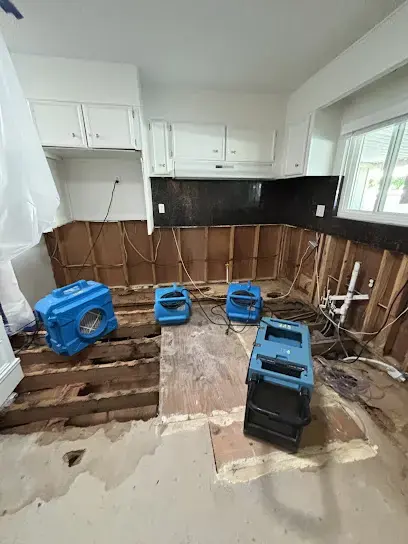
What to do first for structural drying and dehumidification in Spring Valley
- 01
Keep the equipment running
Leave air movers and dehumidifiers on, day and night.
- 02
Keep doors and windows closed
A closed drying chamber lets the dehumidifiers work.
- 03
Do not reset the thermostat far
Steady indoor temperature keeps drying predictable.
- 04
Keep the logs
Ask for the daily moisture readings; they belong in the claim file.
What does structural drying and dehumidification cost in Spring Valley, CA?
In Spring Valley, CA, structural drying typically runs $1,200 to $6,000, mostly driven by how many air movers and dehumidifiers a job needs and for how many days. The class of water, the wet materials and how fast drying started all change the total.
Class 1 or 2, one area
$1,200 to $2,500
- Moisture mapping
- Air movers and an LGR unit
- Three to five days of readings
Class 3, several rooms
$2,500 to $4,500
- Multiple drying chambers
- Cavity drying
- Daily psychrometric logs
Class 4, dense materials
$4,500 to $6,000+
- Desiccant dehumidifiers
- Floor and slab drying mats
- Extended monitoring
Every loss is different. For a closer planning number, run the water damage cost calculator.
How structural drying and dehumidification is handled in Spring Valley
- 01
Moisture map first
The tech who does the walkthrough maps wet materials with pinless meters and thermal imaging before any equipment goes down.
- 02
Stop and extract
The source gets isolated, then the extraction crew pulls standing water with truck-mounted or portable extraction.
- 03
Set the drying plan
The drying team sets air movers to the evaporation load of each room and runs LGR dehumidifiers, or desiccants for dense materials.
- 04
Read daily, then verify
Crews log readings every day and pull equipment only when the wet material sits within 2 to 4 points of a dry reference.
Structural drying is the part of a water loss that people do not see but that decides whether the damage comes back. Water soaks into drywall, framing, subfloor and concrete, and it stays there after the surface looks dry. The drying team's job is to pull that moisture back out of the materials and out of the air, and to prove it is gone with readings rather than by touch.
How drying works
- Air movers sweep moist air off wet surfaces so more water evaporates
- LGR (low grain refrigerant) dehumidifiers pull that moisture out of the air
- Desiccant dehumidifiers dry dense materials and cooler spaces
- Floor mats and injection systems pull water out of slabs, hardwood and cavities
- Containment builds a drying chamber so the equipment works on the wet area
Readings, not guesses
The tech who does the walkthrough records a moisture map and a dry reference reading from an unaffected part of the same house. Every day after that, crews log:
- Moisture content of the wet drywall, framing and flooring
- Temperature and relative humidity inside and outside the drying chamber
- Grains per pound, which shows how much water the dehumidifiers are pulling
- Equipment moves and removals as each area meets the goal
Wet framing, cabinets or a slab? Drying to readings is what keeps a water loss from turning into a mold problem.
Call to get Spring Valley drying startedSpring Valley's dry air helps, but not alone
East County air is often dry, which helps evaporation, but a closed house after a leak holds humidity and dense materials stay wet for weeks without equipment. Mold can start within 24 to 48 hours on wet materials, as the EPA mold cleanup page explains. Drying usually follows water extraction and is the core of slab leak and burst pipe jobs. The OSHA flood cleanup page covers safe handling of wet materials.
Structural Drying and Dehumidification across Spring Valley and East County
The Spring Valley restoration crew covers the hillside streets, the Sweetwater River side of town and the neighboring East County communities, 24/7.
Coverage reaches La Presa, Casa de Oro, Mount Helix, Rancho San Diego, Lemon Grove, La Mesa, Bonita, Sweetwater, El Cajon, National City and Jamul, plus ZIP codes 91977, 91978, 91976, 91979.
Every community and ZIP coveredRelated water damage services in Spring Valley
Structural Drying and Dehumidification questions in Spring Valley
A wet floor or wall does not wait for business hours. The response team for Spring Valley answers around the clock.
Speak with 24/7 dispatch for Spring ValleyWhat is IICRC S500?
IICRC S500 is the industry standard for professional water damage restoration. It sets how losses are classified, how drying is done and how dryness is verified.
How long does structural drying take?
A contained Class 1 or 2 loss usually dries in three to five days. Hardwood, plaster, concrete and multi-layer flooring take longer, and the readings decide.
Why can't I just open the windows?
Outside air can help on a dry day, but it is unpredictable. Dehumidifiers in a closed drying chamber pull water out steadily, day and night.
What does 'dry to standard' mean?
It means the wet materials read within 2 to 4 points of the same material in an unaffected part of the house, confirmed with a meter.
Is the equipment loud and does it use a lot of power?
Air movers and dehumidifiers are noticeable and run on household circuits. Crews spread the load so breakers do not trip.
Does drying get documented for insurance?
Yes. Daily moisture readings, psychrometric logs and photos form the drying record adjusters look for. Coverage depends on your policy, so it is worth checking with your own insurer.
Structural Drying and Dehumidification in Spring Valley? Call now.
The sooner extraction starts, the less drywall, flooring and framing has to come out. One call starts the moisture map.