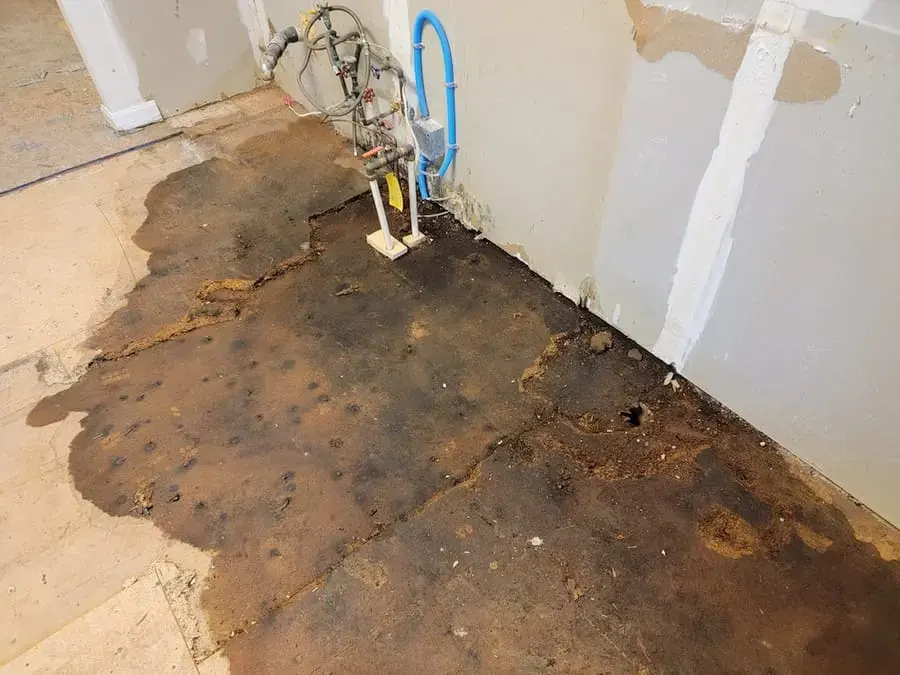
A slab leak is a supply pipe that has opened up inside or beneath the concrete floor of a house. In Spring Valley, where so many homes are ranch and split-level builds on slabs, the first sign is often small and easy to miss.
Key takeaways
- Many Spring Valley homes date from the 1950s to the 1980s, and the copper supply pipe under their slabs is now aging.
- A warm patch on the floor, the sound of running water with every tap closed, or a meter that keeps moving are the classic signs.
- Shut off the main valve first, then photograph the damage before anything is moved.
- A plumber repairs the pipe, while the restoration team traces the water, lifts wet flooring and dries the slab to readings.
- An online slab leak warning check helps sort a real leak from a false alarm.
Why slab leaks turn up in Spring Valley homes
Spring Valley is mostly single-family ranch and split-level housing from the 1950s to the 1980s. Many of those houses sit on concrete slabs, and many stand on graded hillside pads held up by retaining walls.
In a slab house the hot and cold supply pipes often run in or under the concrete. Over decades the copper wears from the inside, and a pinhole opens where the metal is thinnest.
Water from that pinhole has nowhere obvious to go. It soaks the soil under the slab, then rises through cracks and joints into flooring, baseboards and the lowest part of the walls.
Warning signs a homeowner can spot
A slab leak rarely announces itself with a flood. It shows up as a handful of quiet clues, and the clues add up.
Check the house in two passes: first inside, then around the outside of the foundation.
Signs inside the house
Walk the floors barefoot if the house is quiet. Heat and dampness are easy to feel before they are easy to see.
- Warm spots: a patch of tile or wood that feels warm points to a hot water pipe leaking under it.
- Running water sounds: a faint hiss or trickle with every faucet, appliance and toilet off.
- A moving meter: the water meter dial keeps turning when the whole house is shut down.
- Damp carpet or lifting flooring: laminate, wood or vinyl that cups, lifts or smells musty near one spot.
- Wet baseboards: damp drywall at the bottom of a wall, often along an exterior or hallway wall.
- Low hot water pressure: a weak flow at the faucets for no clear reason.
Signs outside the house
On a sloped Spring Valley lot, leaking water often finds the path of least resistance and comes out at a retaining wall, a patio edge or the garage threshold.
Look for a wet strip along the foundation on a dry day, a soft patch in the soil, or fresh moss and green growth where nothing is watered.
What to do in the first hour
Once a slab leak looks likely, the goal is to stop the flow and keep the damage from spreading while the pipe waits for repair.
The online slab leak warning check walks through the signs above and helps decide how urgent the situation is.
- Shut off the main water valve, usually near the street meter or on a front wall of the house.
- Turn off the water heater if the leak is on a hot pipe, so the tank does not run dry and overheat.
- Photograph wet floors, baseboards and the meter dial before anything is moved.
- Lift small rugs and furniture legs off wet flooring and let air reach the floor.
- Keep the electronics and cabinets in the room away from the wet area.
How the water is traced and the floor opened
A leak under the slab is a hidden problem until someone finds where the water is coming from. The restoration team uses moisture readings across the floor to map the wet area and trace the water toward its source.
Wet flooring is lifted, and wet baseboards and the lowest strip of drywall are cut back so that air can reach the framing.
A plumber then repairs or reroutes the failed pipe. Restoration and plumbing are two separate jobs, and the order matters: the drying cannot finish until the water stops.
- Moisture meters show where the slab and framing are wet, even when the surface looks dry.
- Pulled-back flooring lets the crew see whether water is trapped under it.
- Wet padding and swollen underlayment are removed because they cannot dry in place.
Why a slab takes planning to dry
Concrete holds moisture like a sponge, and it releases it slowly. A slab that looks dry on top can still be wet an inch down.
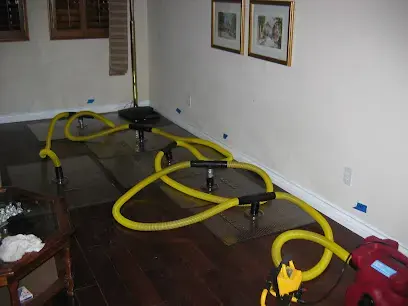
The drying team sets low-grain refrigerant dehumidifiers and air movers and measures the slab, the baseboards and the wall bases at each visit. The goal is the S500 drying standard, not a guess.
Drying a slab is a matter of days, not hours, and the equipment stays until the readings say the structure is dry. The drying time estimator gives a rough idea of what affects the schedule.
- Dehumidifiers pull moisture out of the air so the slab can release more into it.
- Air movers push dry air across the floor and the wall bases.
- Readings are taken at the same spots each visit, so progress is visible in numbers.
Slab leak cleanup versus pipe repair
The pipe fix and the water damage are billed and scheduled separately. A plumber cuts into the slab or reroutes the pipe overhead, while a slab leak water damage crew handles the wet structure.
Insurance paperwork usually wants both sets of records: the plumber's report on the cause and the restoration team's moisture logs and photos.
A leak that is caught early costs less to dry than one that has soaked a whole room, so acting at the first warm spot pays off.
Why speed matters after a slab leak
Water that sits under flooring and inside wall bases invites mold, and that is a good reason to start drying quickly.
It also swells wood floors, loosens tile and stains the lower part of the walls permanently if it is left alone.
The best time to call is at the first sign, not after the carpet is squelching. A small slab leak caught early is a much smaller drying job.