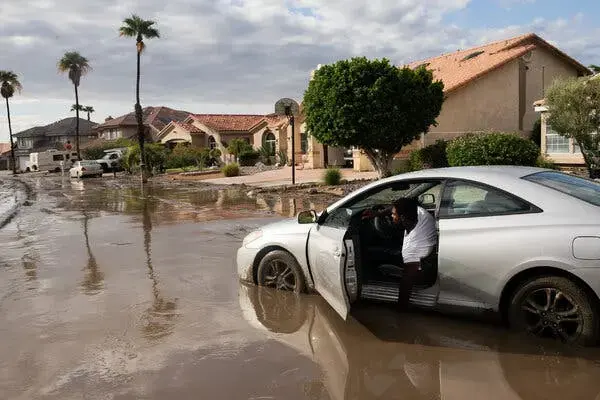
The San Diego River runs through the middle of Santee, and Forester Creek and Woodglen Vista Creek drain into the same flat river valley. When heavy rain pushes water over a bank or into a yard, it brings silt and contamination that a plumbing leak never does.
Key takeaways
- The San Diego River bisects Santee, and Forester Creek discharges into the river inside the city.
- On January 22, 2024, Santee recorded 3.05 inches of rain in one day during a rare, intense storm.
- Floodwater carries mud and contamination, so cleanup removes porous materials and disinfects what stays.
- Santee has a Flood Damage Prevention Ordinance and a San Diego River Floodplain Study that defines special flood hazard areas.
- Stay out of moving water, turn off power only if it is safe and photograph everything before moving it.
Why Santee sits in a flood path
Santee has a semi-arid climate, so the river is quiet for much of the year. When a strong storm arrives, that changes fast.
The San Diego River bisects the city, and it flows east to west across it. Forester Creek discharges into the river in Santee, and Woodglen Vista Creek runs through Town Center Community Park, which sits along the river.
On January 22, 2024, a rare, intense storm hit San Diego County and Santee recorded 3.05 inches of rain that day. A day like that shows how quickly dry ground and dry channels can fill.
How floodwater differs from a plumbing leak
Water from a broken supply pipe starts clean. Water from a river or creek does not.
Floodwater picks up soil, fertilizer, animal waste and debris as it crosses yards and streets. That is why it is treated as contaminated and cleaned more thoroughly than a pipe leak.
- It leaves a layer of silt and mud on floors and in wall cavities.
- It soaks into carpet, padding, drywall and insulation, which usually cannot be saved.
- It can carry bacteria, so hands and skin should be protected during cleanup.
- It arrives all at once, so the amount of water is often larger than a leak.
What to do when water gets in
Safety comes first. Moving water is strong, and a flooded room can hide electrical danger.
Once the water has stopped rising, a storm runoff flood cleanup crew can start the work inside.
- Do not walk or drive through moving water.
- Turn off the power at the breaker only if the panel is dry and safely reachable, and stay out of rooms with standing water if the power is still on.
- Move valuables, papers and electronics to a high, dry spot.
- Photograph the water line on walls and the damage to belongings.
- Wear boots and gloves, and keep children and pets out.
Pulling out the water and the silt
Extraction removes the standing water first. The water extraction crew uses pumps for deep water and truck-mounted equipment for the rest.
After the water is out, the silt remains. Mud-out means shoveling and washing sediment off floors, out of corners and from under cabinets before it dries into a crust.
Before the first visit, a short written list of the rooms that took water, with rough heights, helps the crew plan equipment and the order of work.
Heavy items such as a refrigerator or a couch may need extra hands, so mention them when the visit is arranged.
What is removed
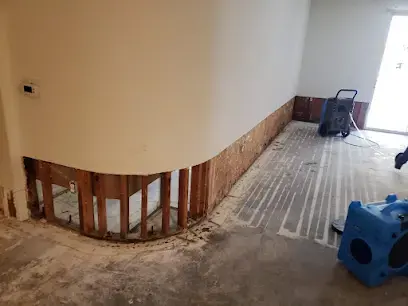
Anything porous that sat in floodwater is cut out and bagged, because it cannot be made clean again.
- Carpet and padding.
- Drywall below the water line, and the insulation behind it.
- Particle board cabinets and soaked furniture.
What is cleaned and kept
Framing, concrete and many hard floors are washed, treated with a disinfectant and dried.
Drying after the mud is out
Once the debris is gone, the structure is wet and needs controlled drying. Air movers and dehumidifiers run, and the crew takes meter readings of the framing, subfloor and slab at each visit.
A floodwater job often takes more equipment and more days than a single leak, because every low room is wet at once.
A checklist for the first day after the water drops
When the water finally leaves, the work is only starting. Silt dries into a hard crust, and wet materials begin to sour.
The goal for the first day is to document, protect and begin removal while the mud is still soft.
- Walk the property and photograph every room, with a wide shot and a close shot.
- Note the height of the water line on the walls.
- Open doors and windows for air if the weather allows.
- Wear boots, gloves and a mask while handling wet materials.
- Set aside belongings that can be cleaned, and bag the rest.
- Do not run a household vacuum or a furnace fan in a flooded room.
What can be saved and what cannot
Hard, non-porous items such as glass, metal and most plastics can be washed and disinfected. Solid wood furniture can sometimes be saved if it is dried slowly.
Anything that soaked up the water usually has to go. That includes mattresses, upholstered furniture, stuffed toys and food in open containers.
Photographs and papers are the hardest decision. Some can be frozen to stop damage until they can be treated, so ask before throwing them out.
Santee flood rules and floodplain maps
Santee has a Flood Damage Prevention Ordinance and a San Diego River Floodplain Study. The study defines the special flood hazard areas in the city.
New construction in Santee should be elevated at least one foot above the 100 year floodplain shown in the city's flood study.
Owners who rebuild after a loss should ask the City how those rules apply to their property before they start. Plans and permits are a matter for the City and the owner's design and building team, not for the drying crew.
Insurance and records after a flood
Flood damage and a burst pipe are often treated differently by an insurer, so ask early what the policy covers.
Keep dated photos, a list of damaged items and the restoration team's moisture readings. Do not throw items away until they have been photographed.
The Santee water damage experts can supply the drying logs and photos the insurer asks for.