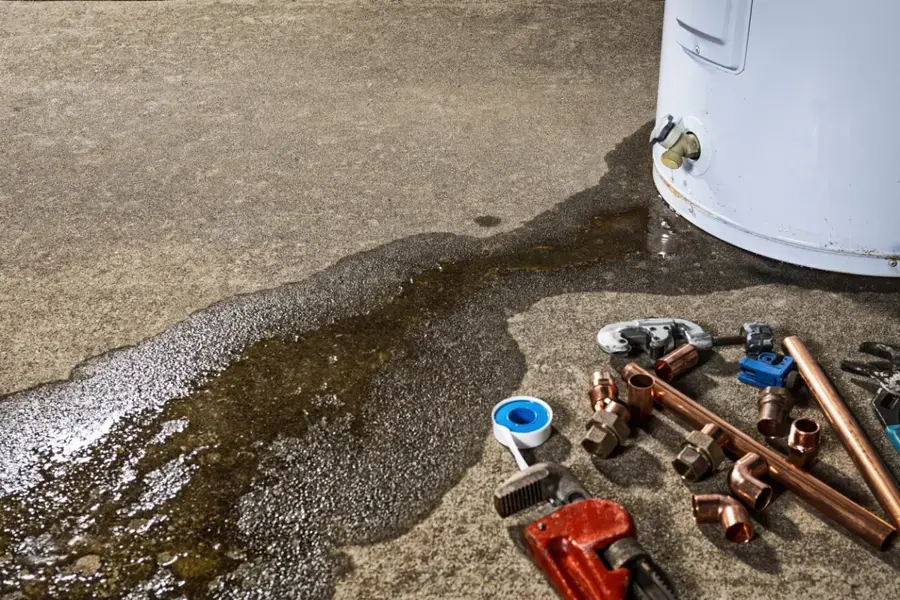
When a water heater tank starts to leak, the water does not wait for a plumber. In La Mesa the replacement also brings a rule: the City says replacing a water heater requires a permit.
Key takeaways
- The City of La Mesa says replacing a water heater requires a permit.
- A tank that leaks from the shell is replaced, not patched.
- About 73 percent of La Mesa housing units were built before 1980, so many tanks sit in older closets and garages.
- Water in a closet runs into wall bases, while water in a garage spreads across the slab.
- Cleanup means shutting off the supply, extracting the water and drying the floor, the wall bases and anything the water touched.
Why older La Mesa homes see tank leaks
The median La Mesa home was built in 1971, and about 73 percent of housing units predate 1980. The largest build eras are the 1970s and the 1950s.
In houses that age, the water heater is often tucked into a closet off a hallway or into a corner of the garage. Those are places where a slow leak can run for a while before anyone looks.
La Mesa is also a city of rolling hills with many hilltop home sites, and a balance of single-family and multi-family housing, so a tank failure can land in very different kinds of buildings.
Signs a tank is leaking
A tank rarely fails all at once. There are usually hints, and spotting them early keeps the loss small.
- Puddles or a damp ring around the base of the tank.
- Rust streaks on the tank shell or on the fittings at the top.
- A dripping relief valve discharge pipe.
- Warped or stained flooring around the closet door or the garage corner.
- Hot water that runs out quickly or comes out rusty.
- A musty smell in a closet that has no other source of moisture.
Telling a leaking tank from condensation
Not every damp tank is a failed one. A cold tank in a humid closet can sweat, and a relief valve can drip for a short time after the heater cycles.
The test is simple: dry the tank and the floor with a towel, then check again after an hour. Water that comes back from the same spot on the shell, or from under the tank, points to a real leak.
A leak from a fitting at the top can sometimes be fixed. A leak from the bottom or the side of the shell cannot.
- Dry the base of the tank and the floor, then watch for fresh water.
- Look for rust where the pipes enter the top of the tank.
- Check the pipe from the relief valve for a steady drip.
- Compare the damp spot with the cold water pipe, which can sweat too.
What to do when the tank is leaking
Shutting off the supply comes first, and the steps are simple.
A water heater leak cleanup crew can start on the wet floor while the tank waits for a plumber.
- Close the cold water valve at the top of the tank.
- Turn off the power at the breaker, or set a gas unit to its pilot position.
- Do not touch outlets or cords near standing water.
- Photograph the tank, the label and the wet area.
- Move boxes, shoes and other stored items out of the water.
The permit and the replacement
A tank with a leaking shell cannot be repaired. The shell has failed, so the tank is replaced.
The City of La Mesa says replacing a water heater requires a permit. The permit belongs to the plumbing work, and the plumber or the property owner should confirm it with the City before the new tank goes in.
The cleanup runs on its own track. The restoration team does not install or permit the tank, and drying can begin as soon as the water is stopped.
Where the water goes: closet versus garage
The location of the tank changes the shape of the damage.
A closet tank
In a closet the water is confined by walls on three sides. It soaks the bottom of the drywall and wicks up the framing, then escapes under the door into the hallway.
Carpet in the hall can turn damp within hours, so the damage often reaches farther than the closet.
A garage tank
In a garage the water spreads across the slab toward the lowest point. It can reach the shared wall with the house, a cabinet or a pile of stored boxes.
Cardboard soaks up water quickly and should be moved early.
Planning ahead for an older tank
Because so many La Mesa homes are older, a quick look at the tank now and then is cheap insurance. The goal is to catch a slow leak while it is still a drip.
Learning where the shutoff valve is before a leak happens saves minutes when it matters. A plumber can also confirm the permit steps for a planned replacement, so the swap is not rushed after a failure.
- Read the age on the tank label and note it for later.
- Look at the floor around the base once a month.
- Keep boxes and cardboard off the floor near the tank.
- Know where the cold water shutoff valve and the breaker are.
- Ask a plumber about the permit before a planned replacement.
How the cleanup runs
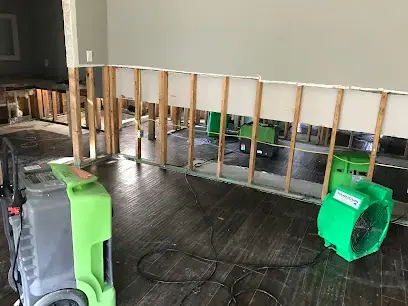
Extraction comes first. The crew uses a wet vacuum and a pump if needed to pull water from the floor and the wall bases.
Wall bases and baseboards are checked with moisture meters, and wet drywall or insulation is cut back where readings are high. Air movers and dehumidifiers run until the area meets the drying goal.
In an apartment or condo, water from a tank can pass through the floor to a neighbor. About 36 percent of La Mesa housing units are in buildings of five or more units, and about 52 percent of occupied homes are rented.
Telling the property manager at once helps limit the damage, and the La Mesa water damage pros cover shared walls and floors as part of the job. The main water heater leak cleanup page covers the same steps for the wider area.
- Extract standing water from floors and wall bases.
- Remove wet baseboards, carpet pad and any swollen cabinet toe kicks.
- Dry the framing and slab to meter readings, not to a guess.
Questions to ask for insurance and the landlord
Clear records help with any water heater claim. Keep the photos, the plumber's invoice and the restoration team's moisture logs together.
Renters should tell the landlord in writing, and owners of rental units should do the same with their insurer. The sooner the report is made, the easier it is to show that the loss was sudden.