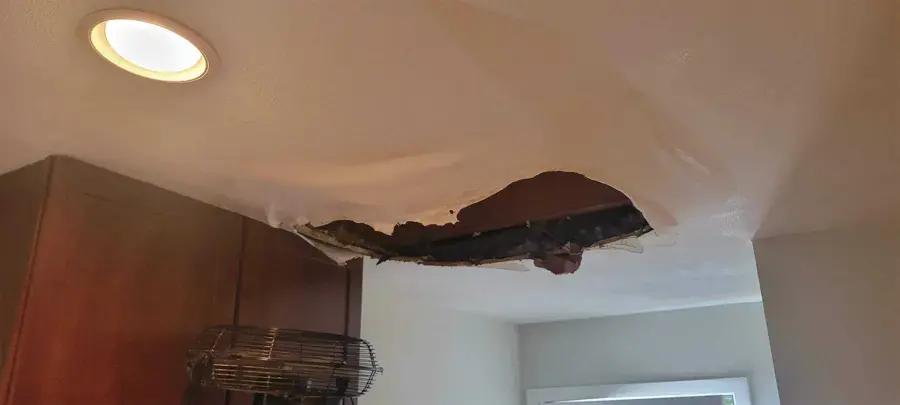
A brown stain or a bulge in the ceiling of a La Mesa apartment is rarely a roof problem. More often the water comes from a bathroom, kitchen or pipe in the unit overhead.
Key takeaways
- About 36 percent of La Mesa housing units are in buildings of five or more units, and about 52 percent of occupied homes are rented.
- A sagging ceiling holds water and can fail, so the area under it should be cleared.
- Photograph the damage and report it to the building manager in writing the same hour.
- The ceiling is opened where it is wet so the framing and insulation can dry in place.
- The leak source above has to be fixed or the ceiling will get wet again.
Why upstairs leaks are common in La Mesa buildings
La Mesa is a city of postwar growth, with a median build year of 1971. About 36 percent of its housing units are in buildings of five or more units, and 4,011 are in buildings of 50 or more units.
Where homes are stacked, a leak in a bathroom or kitchen has only one way to go: down. It soaks the floor, enters the ceiling cavity of the unit below and shows up as a stain.
More than half of occupied homes are rented, so the person under the leak is often a renter who does not control the pipes above.
Where the water comes from
The source is usually in the unit above or in a shared pipe in the wall. Knowing the likely sources helps the manager find it faster.
- A leaking shower pan, tub drain or overflow in the bathroom above.
- A failed toilet supply or wax seal.
- A dishwasher or sink drain leak in the kitchen above.
- A split supply pipe inside a shared wall.
- A water heater or washer leak in an upstairs closet.
- A leak from the roof, if the unit is on the top floor.
Signs the ceiling is holding water
The ceiling often tells the story before the leak is found.
Early signs
A pale yellow or brown ring, a patch of bubbled paint or a damp smell often appears first. These can come and go with each shower or load of laundry upstairs.
Urgent signs
A ceiling that sags, drips or bulges has water pooled behind it. The weight of that water can bring down a section of drywall.
- Move people, pets and furniture out from under a bulge.
- Set a bucket under any drip.
- Keep lights and fans near the wet area off until it has been checked.
First steps for a renter
Most of the early actions are about keeping a record and keeping the damage from growing.
A ceiling leak water damage crew can begin once the source above has been shut off.
- Photograph the stain, the sag and any dripping water, with a date visible.
- Tell the building manager or owner at once, in writing.
- Ask the manager to check the unit above and shut off the water to it.
- Clear belongings away from the wet area and cover furniture.
- Check with the renter's insurer about contents coverage.
How a ceiling leak is dried
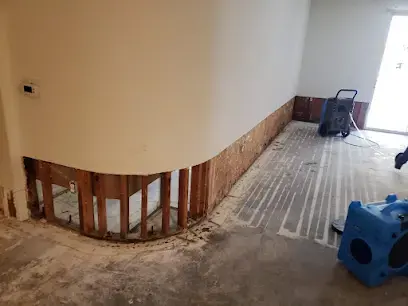
A wet ceiling cannot be dried by painting over it. The water is trapped between the drywall and the framing, and the only way to dry it is to open it up.
The crew cuts away the wet drywall, pulls out wet insulation and checks the joists with a moisture meter. Fans and a dehumidifier then run until the framing reads dry.
Opening the ceiling also lets the crew see the full size of the leak. It is often larger than the stain.
- Wet drywall is cut back to dry material.
- Wet insulation is removed because it cannot dry in place.
- Framing is dried with air movers and a dehumidifier.
- The room is left ready for a repair crew to patch and paint.
What not to do with a stained ceiling
A wet ceiling invites quick fixes, and most of them make things worse. The water is still in the cavity, and it needs a path out.
Painting over a stain traps the moisture and hides the problem for a while. It then returns, usually larger and darker, when the paint peels.
- Do not paint or patch over a stain until the ceiling is dry.
- Do not turn on a ceiling fan or light that sits under a wet spot.
- Do not use a household vacuum to pull water from the ceiling.
- Do not wait for the stain to fade. Fading is not the same as drying.
- Do not push on a bulge with your hands, because the drywall can fall.
Why waiting makes it worse
Wet drywall and insulation do not dry well in a closed ceiling cavity. Over time the paper face breaks down, the drywall softens and a musty smell appears.
That smell is often the first sign that mold has started to grow, which is one reason to start drying early. A fast response keeps the work to one section of ceiling rather than a whole room.
In a shared building, delay also spreads the loss. Water that keeps running upstairs keeps feeding every unit below it.
When the leak starts in a bathroom above
A shower or tub leak often runs for weeks before it reaches the ceiling below. By then the subfloor and the framing above may be wet too.
The same issue is covered under shower and bathroom leak damage, and the work often involves both units at once.
Until the source is stopped, any drying below will be wasted, because the ceiling will get wet again with the next shower.
Dealing with the manager and the insurer
A calm, written report helps everyone. Include the date, the location of the damage and the photos.
Who pays for the ceiling repair and for damaged belongings depends on the lease, the building owner's policy and the renter's policy. The La Mesa water damage pros can supply moisture readings and photos that those parties may ask for.
Keep every message about the leak, and note when the manager shut off the water.