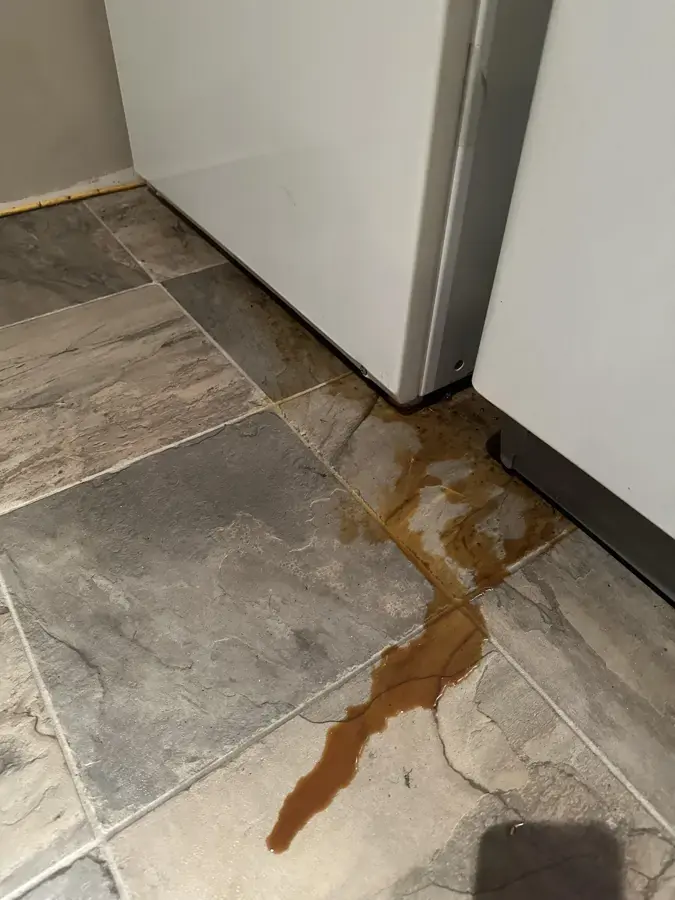
A washing machine hose is a small part with a big job. In a multi-unit building in Chula Vista, one failed hose can send water through a floor, down a wall and into a neighbor's ceiling.
Key takeaways
- About 40.2 percent of occupied Chula Vista homes are renter-occupied, and about 30.9 percent of units sit in buildings with two or more units.
- A washer, dishwasher or ice maker hose can fail without warning and run for hours when nobody is home.
- Close the shutoff valves for the appliance first, then tell the building manager or owner at once.
- Water usually spreads under flooring and into wall bases before the surface looks wet.
- Drying covers the floor, the wall behind the machine and any ceiling below that took water.
Why hose leaks matter in a city of shared walls
Chula Vista has about 90,273 housing units. Detached single-family homes number 46,944, but 27,940 units are in buildings with two or more units, and 8,013 of those are in buildings of 50 or more units.
Where homes share floors and ceilings, a leak in one unit does not stay in that unit. The water follows pipes and framing down to the home below.
About 40.2 percent of occupied homes are rented, so many leaks involve a tenant, a landlord and a neighbor at the same time.
How a hose fails
Supply hoses are under pressure whenever the valve behind the appliance is open. That is all day and all night, whether the machine runs or not.
A hose does not usually leak a little first. It tends to split, slip off its fitting or burst, and then it sprays or pours until someone turns off the water.
Washers and dishwashers
Washing machine hoses sit behind the unit, out of sight. A kink or a worn coupling can let go when the machine is pushed back against the wall.
A dishwasher inlet hose sits in a dark cabinet space, so a slow drip can keep running under the cabinet floor for days.
Ice maker and sink connections
A thin hose feeds the ice maker in a refrigerator. When it cracks, the water runs under the fridge and spreads beneath the kitchen flooring.
Small sink supply connections can drip into the cabinet below, which hides the damage until the cabinet floor swells.
What to do in the first minutes
The first actions are the same in a house or an apartment. Speed keeps the water from reaching the neighbors.
An appliance hose leak cleanup crew can take over the drying once the flow is off.
- Close the two shutoff valves behind the washer, or the single valve under the sink or behind the fridge.
- If a valve will not turn, use the unit's main water shutoff or the building's.
- Unplug the appliance only if the outlet is dry and out of the water.
- Mop up standing water and move rugs and boxes off the floor.
- Photograph the hose, the appliance and every wet spot.
Telling the building manager and the neighbors
In a multi-unit building, tell the manager or owner right away, and do it in writing so there is a date on record. A manager can shut off water to the unit and check the home below.
If the neighbor below has a stain or a dripping ceiling, offer to share photos. A quick, calm exchange usually prevents hard feelings.
Whether the renter, the owner or an insurer pays for what is damaged depends on the lease and the policy. That is a question for those parties, not for the drying crew.
- Report the leak in writing and keep a copy.
- Ask the manager to check the units on the floor below.
- Save photos, dates and any messages about the leak.
- Ask the insurer about renter coverage if the apartment is rented.
Where the water goes in a multi-unit building
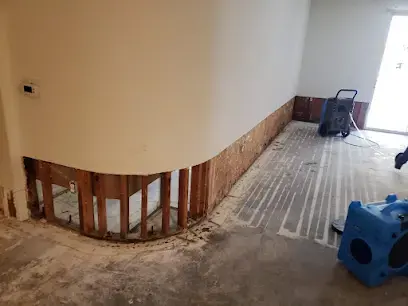
Water that escapes a hose follows the lowest path. It soaks the laundry closet floor, slips under the flooring and enters the wall base.
From there it can run along joists to the ceiling of the unit below. A bubbled paint patch or a brown stain on that ceiling is a sign the water has gone through.
A ceiling that is sagging or dripping needs attention quickly. The ceiling leak water damage team opens the wet section so the cavity can dry.
What belongs in the laundry area and what does not
Laundry closets collect clutter, and clutter hides leaks. A tidy space makes a hose problem easier to spot and the cleanup faster.
After a leak, the first things to come out are anything stacked on the floor: detergent boxes, hampers, baskets and cardboard. These soak up water and spread it.
Once the area is clear, the crew can reach the wall base behind the machine, which is where hidden moisture usually sits.
- Keep the floor around the machine clear of paper and cardboard.
- Store detergent on a shelf, not on the floor.
- Leave a gap between the washer and the wall.
- Place a shallow tray under a machine that sits on a finished floor.
How the drying is done
The crew starts by finding every wet spot with a moisture meter, since water often travels farther than the visible stain.
Standing water is extracted, wet baseboards are pulled off, and a small opening may be cut in the wall behind the appliance to let air in. Fans and dehumidifiers then run until the readings are normal.
In a building with shared walls, the crew may also check the unit below and beside the leak, with the occupant's permission.
- Extract the water from flooring and cabinet bases.
- Remove baseboards and any swollen cabinet toe kicks.
- Open a ceiling below if it is sagging or stained.
- Dry to readings, not to what looks dry.
Cheap habits that prevent the next leak
Most hose leaks are preventable with a few minutes of attention once a year.
A look behind the machine is worth the trouble, and the Chula Vista water damage pros say the same thing about shutting the water when leaving for a long trip.
- Look at the hoses for bulges, cracks and rust at the couplings.
- Leave a few inches of space so the hoses do not kink.
- Replace old rubber hoses with braided ones when they age.
- Turn off the washer valves before a long trip.
- Learn where the unit's shutoff is before it is needed.